.webp "Luxury Hotel in Manali Himachal Pradesh – Book Now")

Keep In Touch?
The Orchid Manali - a Boutique Hotel Shuru, Naggar Road, Manali, Himachal Pradesh - 175 143

Call Anytime
+91 916 916 6789
Email address
resv.manali@orchidhotel.com

Things to Do in Manali: A Local Guide to the Valley
By Web Admin at KHIL, The Orchid Manali
The best things to do in Manali are Solang Valley for paragliding and the cable car, a drive through the Atal Tunnel into Sissu, the wooden Hadimba Devi Temple in its cedar forest, the hot springs at Vashisht, the cafes of Old Manali, and an easy walk along the Beas River.
Most guides to Manali read the same because most of them were written by people who never got off Mall Road. This one is different. We run a hotel here, at Shuru on the Naggar road, so we watch what works and what wastes a guest's day across every season. What follows is the honest version: where to go, when to go, what to skip, and how to plan a trip that does not end with you stuck in a four hour traffic jam below Rohtang. If you only take one thing from this page, take this: Manali rewards people who pick two or three things and do them properly, not people who try to tick off a list.
Where is Manali and why is it busy all year?
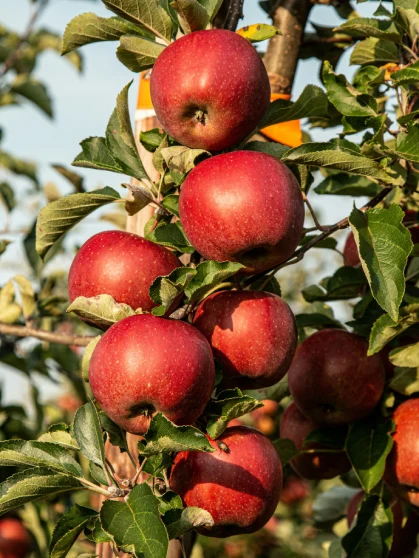
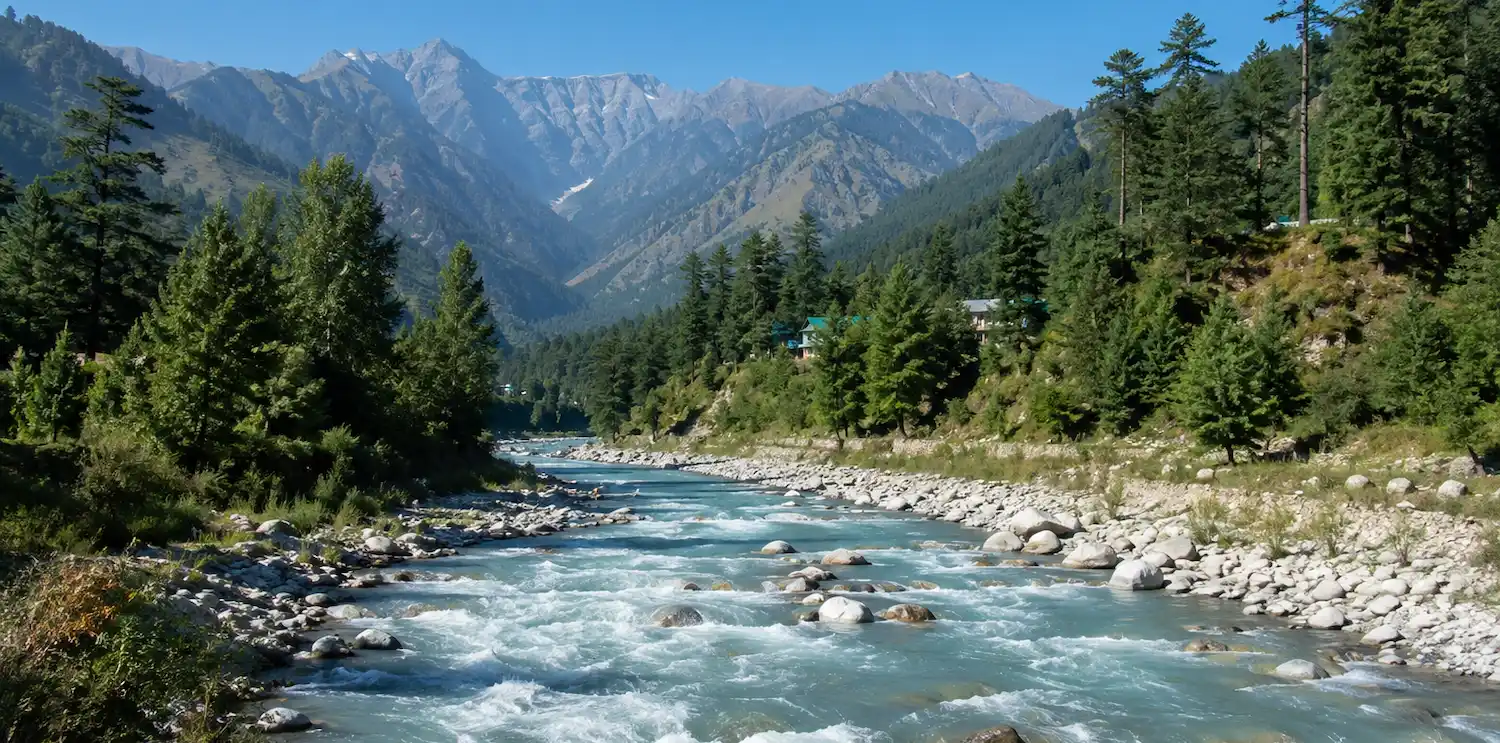
Manali sits at about 2,050 metres in the Kullu district of Himachal Pradesh, on the banks of the Beas River. It stays busy all year because each season sells something different: snow in winter, an escape from the plains in summer, green valleys in the monsoon, and apple orchards and clear skies in autumn.
That is the real reason the town never empties. A family from Delhi comes in June to get away from 44 degree heat. A couple from Mumbai comes in January to see snow for the first time. A group of friends comes in October because the air is clean, the orchards are heavy with fruit, and the hotels are cheaper. The valley runs north from Kullu along the Beas, with Old Manali and the temples on one side and the Naggar road following the quieter left bank. Knowing which side you are on matters more than people expect, because Mall Road traffic in peak season can turn a three kilometre hop into a forty minute crawl.
A short word on getting your bearings. The town centre is Mall Road. North of it sits Old Manali, the backpacker and cafe quarter. Across the river and a little south runs the Naggar road, the calmer side, which is where we are. South of Manali the valley drops toward Kullu and the airport at Bhuntar. North of Manali the road climbs toward Solang, the Atal Tunnel and, in season, Rohtang. Hold that map in your head and the rest of this guide falls into place.
What are the best things to do in Manali?
The top things to do in Manali are Solang Valley adventure sports, a drive through the Atal Tunnel to Sissu, Rohtang Pass in season, Hadimba Devi Temple, the Vashisht hot springs, Old Manali cafes, Mall Road, and short treks like Jogini Falls and Bhrigu Lake. Pick by season and by how much driving you can stand.
Here is the blunt truth nobody puts on a glossy page. Half of Manali's famous sights are a drive away, and the drive is the bottleneck, not the ticket price. In peak summer and around New Year, the road north toward Solang and Rohtang clogs by nine in the morning. So the single best planning decision you can make is to leave early. Be on the road by seven for anything north of town. Do the far things first and the in-town things, the temples, the market, the river, in the afternoon when the day-trippers are stuck in traffic. We tell our guests this at check in and the ones who listen come back happy.
The sections below take each of the big draws in turn, with real distances, honest timing, and what each one is actually like once you get there. If you would rather sleep ten minutes from all of it, you can book a valley view room at Orchid Manali and use the hotel as your base for the whole valley.
Solang Valley: the adventure sports hub, 14 km from Manali
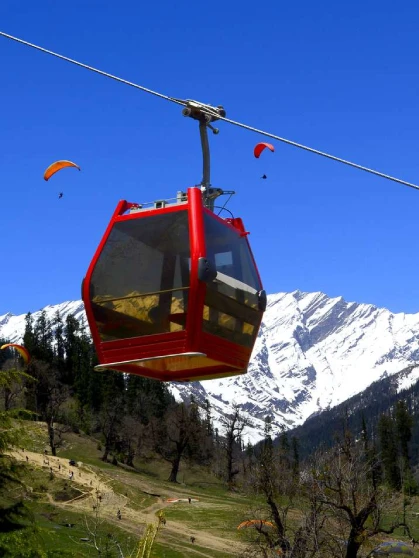
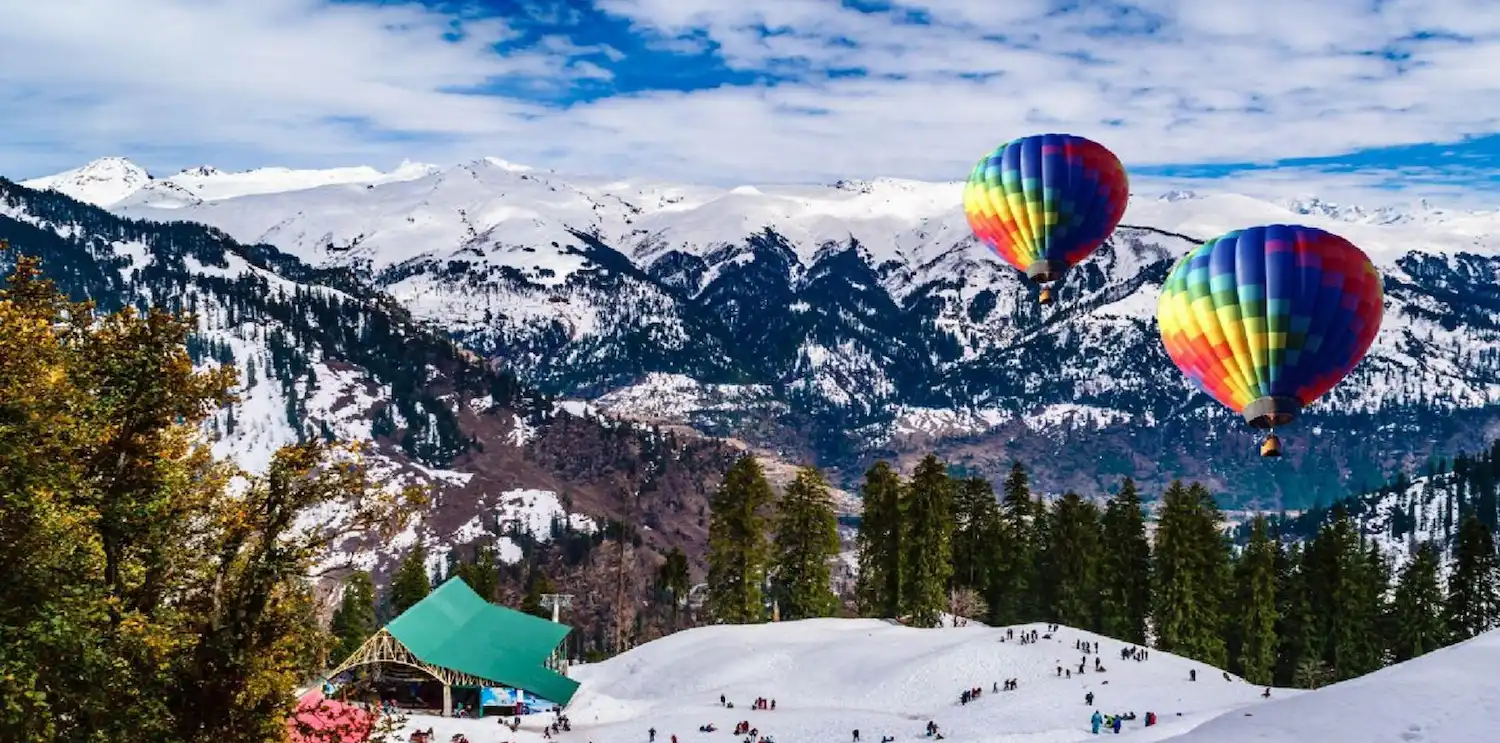
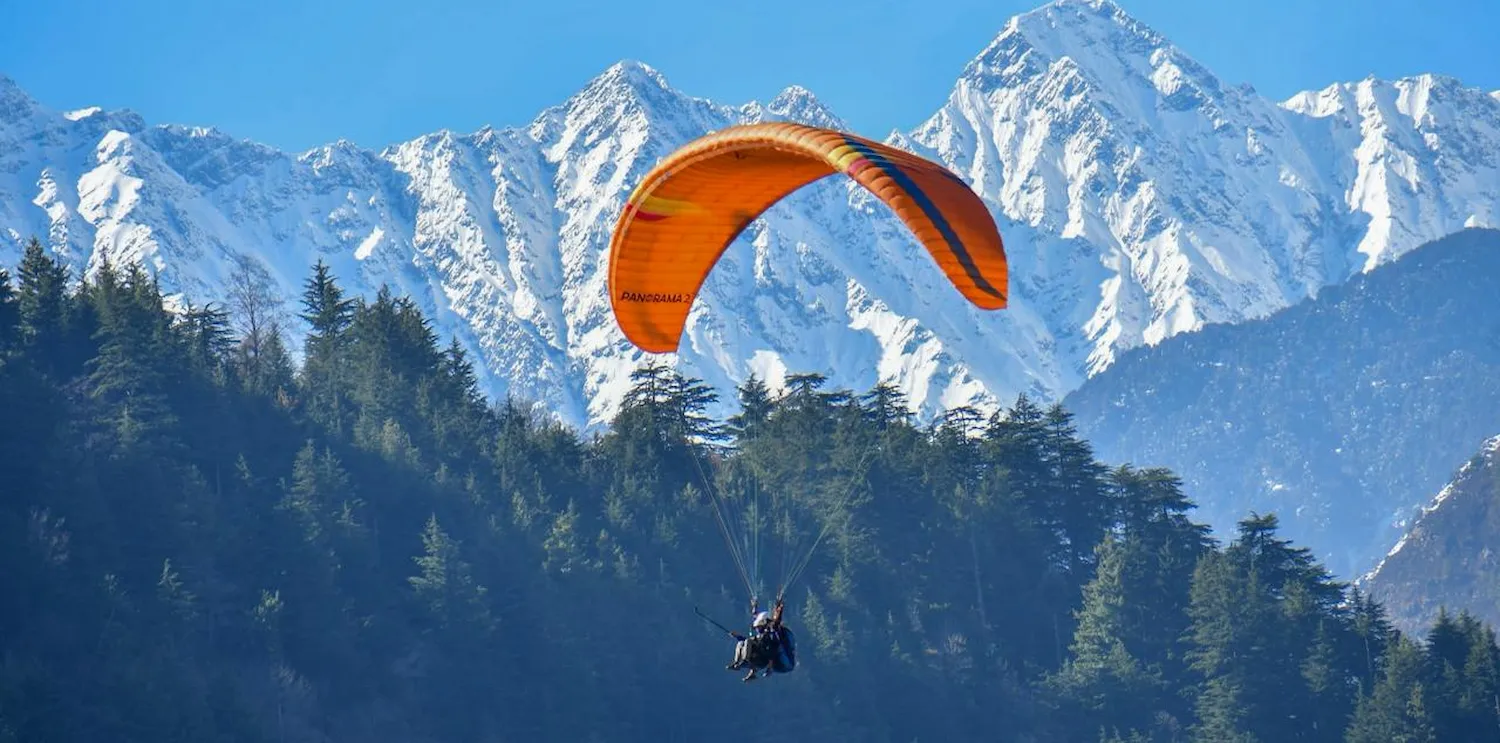
Solang Valley is about 14 kilometres north of Manali, roughly a 40 to 60 minute drive depending on traffic. It is the main spot for paragliding, zorbing, the ropeway cable car, and winter skiing. Go early, because by mid-morning in season the small valley floor and its single road fill up fast.
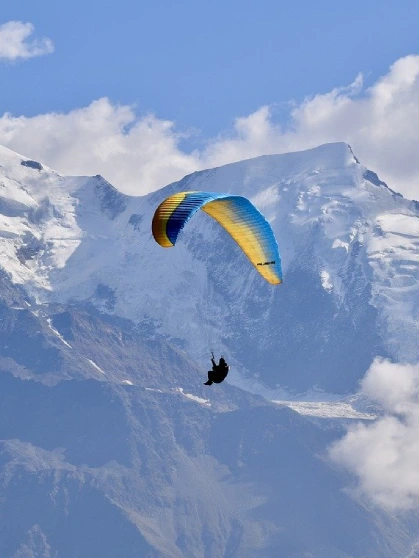
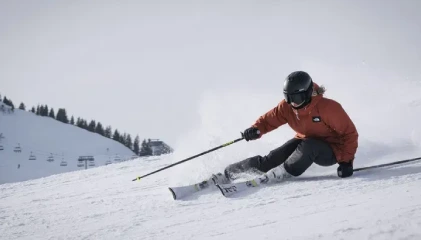
Solang is the activity that most first-time visitors come for, and it delivers if you time it right. The tandem paragliding here is the short, accessible kind. You run a few steps off a slope with a trained pilot and float over the valley for a few minutes. It is not the long high-altitude flight some people imagine, so set expectations and you will enjoy it. The Solang ropeway gives you the height and the views without the running, and it is the better pick for older parents or small children. In winter, roughly late December through February when there is snow on the lower slopes, this is where people learn to ski and ride snow toys.
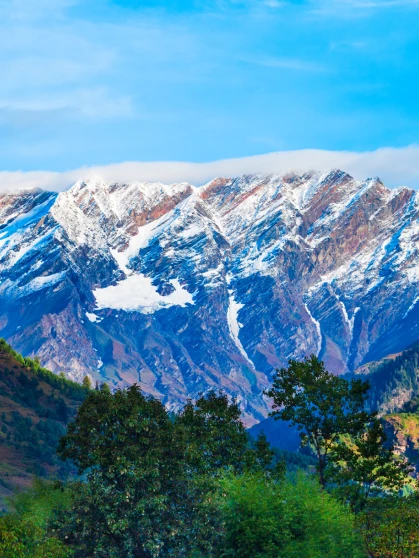
Two warnings from watching guests do this for years. First, agree the price for every activity before you start, not after, because the touts quote loosely and argue later. Second, the valley floor turns into a churned, muddy, crowded fairground at peak times. If that is not your scene, take the ropeway up and away from the crowd, or come on a weekday morning out of peak season. The drive up from town is genuinely lovely, following the river past Palchan, and on a clear morning the snow line ahead is the photo everyone wants.
A word on the seasons here, because Solang changes completely through the year. In winter, when the slopes hold snow, this is where beginners learn to ski and where the snow toys, tubes and short rides run. The skiing is learner-level, not a developed resort, so come for the novelty rather than serious pistes. In summer the same slopes are green and the activity menu switches to paragliding, the zorbing balls, ATV rides and the ropeway. The single best light for photographs is the first hour after the valley opens, before the haze and the crowd build, which is one more reason to be the first car up. If you are travelling with older parents, the ropeway is the dignified way to get the height and the panorama without the scramble on the slope.
Atal Tunnel and Sissu: the easiest day trip out of the valley
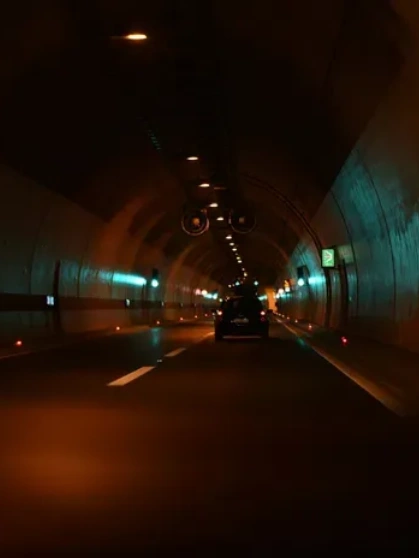
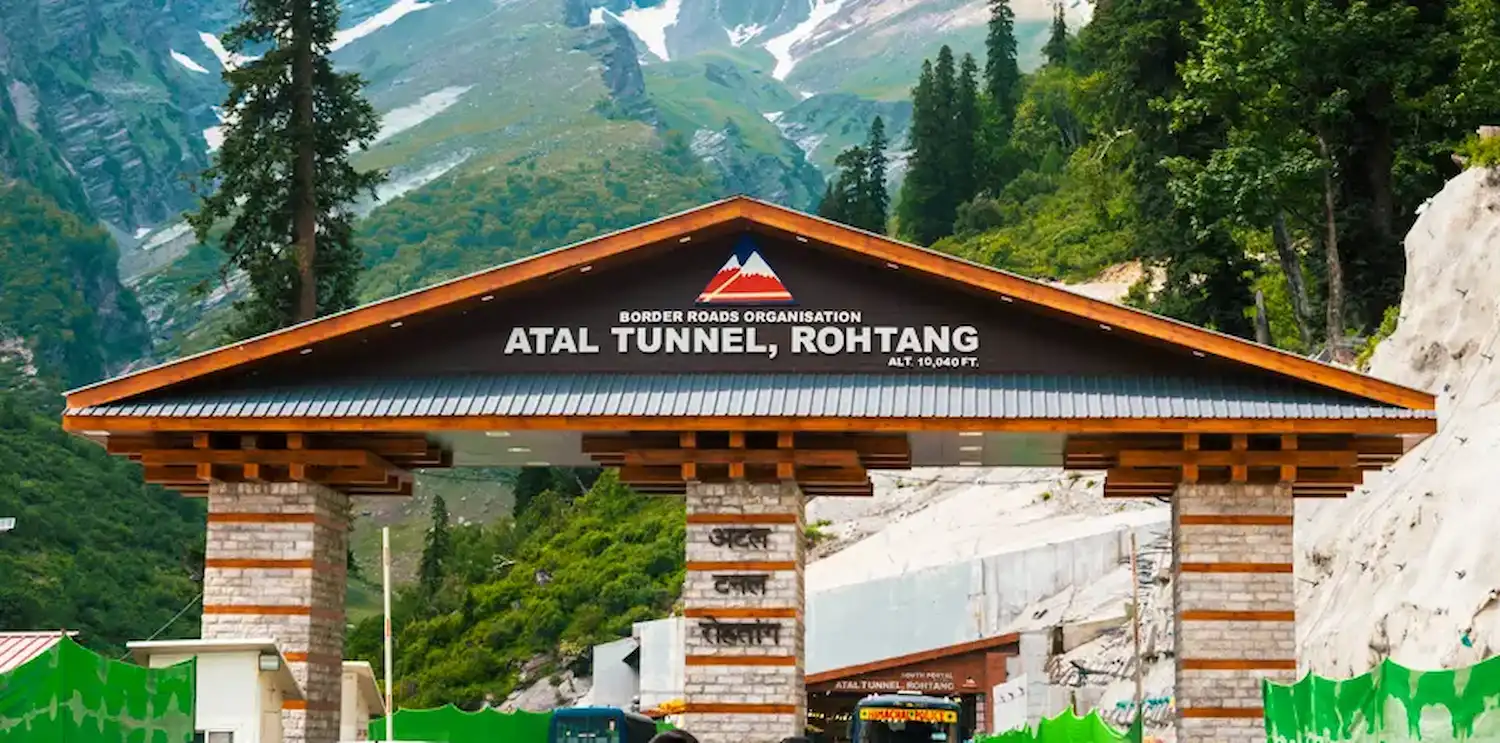
The Atal Tunnel is 9.02 kilometres long, the world's longest highway tunnel above 10,000 feet, and its south portal is about 25 kilometres from Manali. Drive through it and in ten minutes you reach Sissu in the Lahaul valley, a different landscape of bare brown mountains, a waterfall, and the Chandra river. It needs no permit.
This is the day trip we recommend most often now, and it has quietly replaced Rohtang for a lot of people. The tunnel opened in October 2020 and it changed the valley. Before it, Lahaul was cut off by snow for about six months a year and the only way across was the white-knuckle climb over Rohtang. Now you drive a flat, lit, all-weather tunnel under the Pir Panjal range and pop out the other side into a completely different world. The green pine slopes of Kullu give way to the high, dry, stark beauty of Lahaul. It feels like you crossed into Ladakh in twenty minutes.
Sissu, the first village past the north portal, has a roadside waterfall, a flat riverside meadow, and a calm that the Manali side lost years ago. There is a small Sissu lake and a few dhabas serving hot Maggi and rajma chawal. Families love it because there is space to breathe and the kids can run. A practical note that matters: fill your fuel tank in Manali, because there is no reliable petrol pump near the tunnel or for a long stretch into Lahaul. Carry water and some snacks too. The tunnel itself has lane discipline cameras and a speed limit, and stopping inside is not allowed, so do your gawking from the portals.
Rohtang Pass: should you still bother?
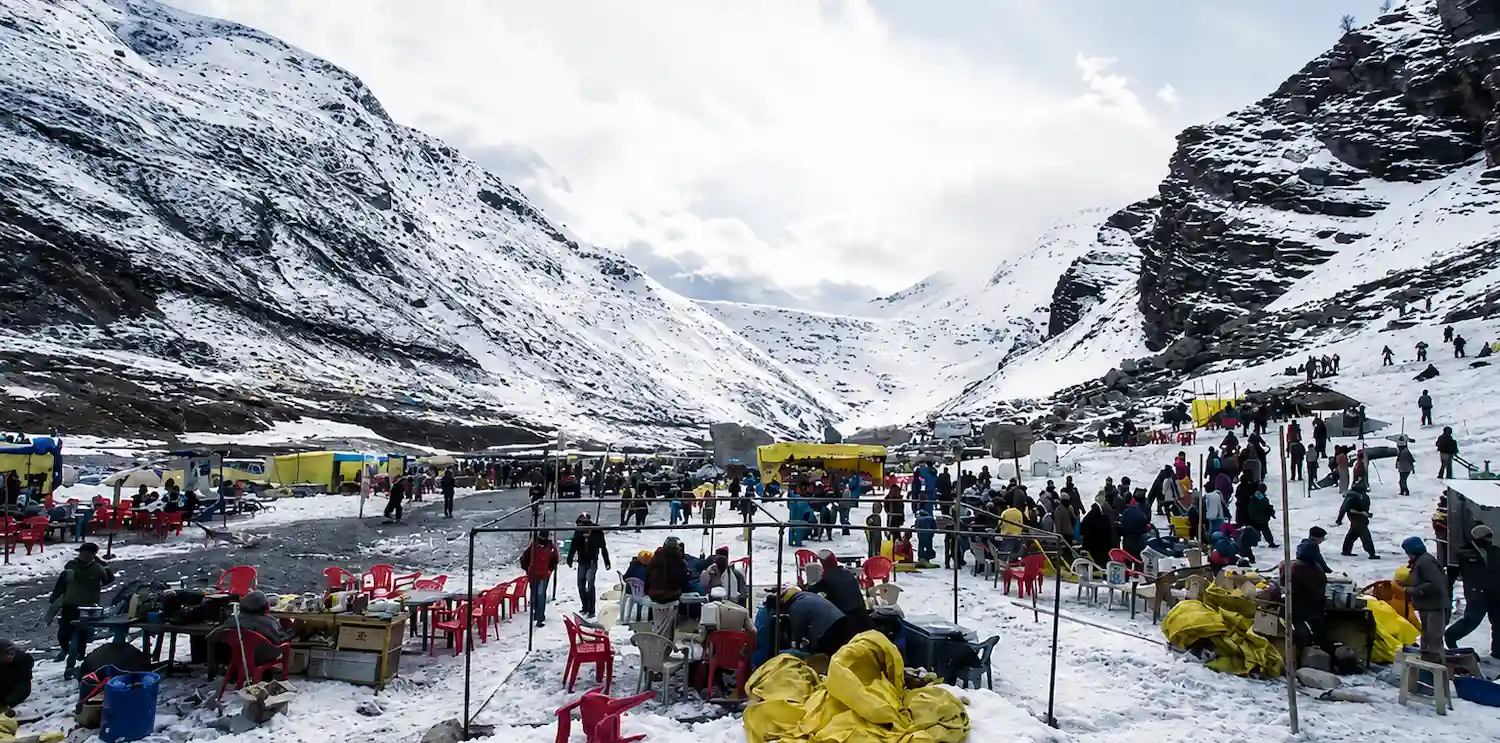
Rohtang Pass is about 51 kilometres from Manali at roughly 3,980 metres, open in season from around May to October. It needs a permit and the National Green Tribunal caps daily vehicle numbers. Since the Atal Tunnel opened, Rohtang is now a choice for the views and the snow point, not a thoroughfare. Go only if the snow and the high pass are the point for you.
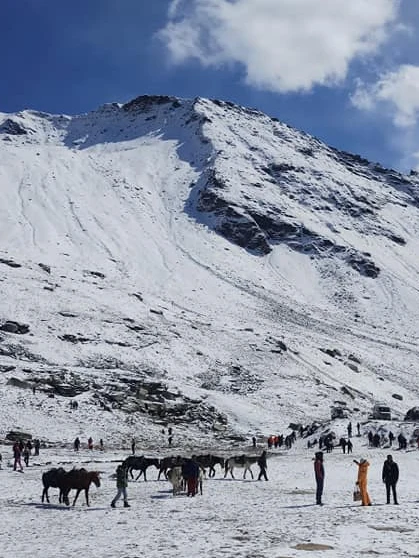
Let us be honest about Rohtang, because plenty of operators will not be. It is high, it can be spectacular, and on a clear day the glaciers and snowfields are the real Himalaya. But it is also a managed, permit-controlled, often crowded snow point where the experience is frequently a churned patch of grey snow shared with hundreds of other people in rented gumboots and fluorescent snowsuits. The road can be slow and rough, and weather closes it without warning.
So here is our advice. If you are visiting in winter, Rohtang is usually shut anyway, and Solang or Gulaba is your snow. If you are visiting in summer and you want a high mountain pass, the Atal Tunnel route to Sissu gives you most of the drama with none of the permit hassle and far less traffic. Choose Rohtang specifically when it is open, the weather is clear, and standing on a famous Himalayan pass is something you really want to do. Book the permit online in advance through the official Himachal portal, because they sell out, and start before dawn. The pass also stays closed on Tuesdays for maintenance, which trips up a lot of people.
Hadimba Devi Temple and the cedar forest at Dhungri
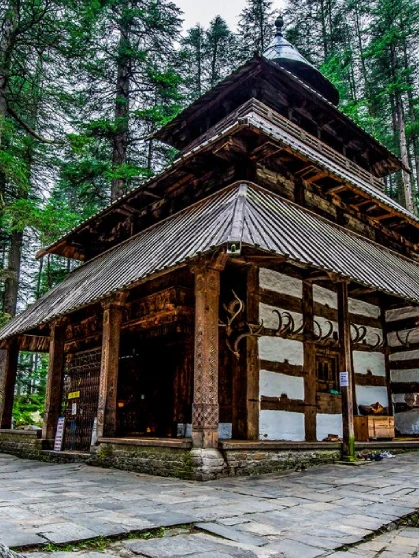
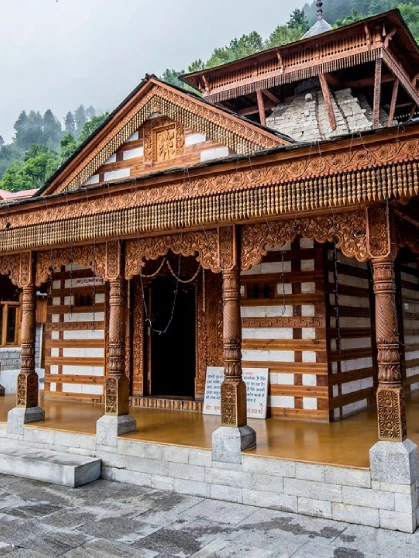
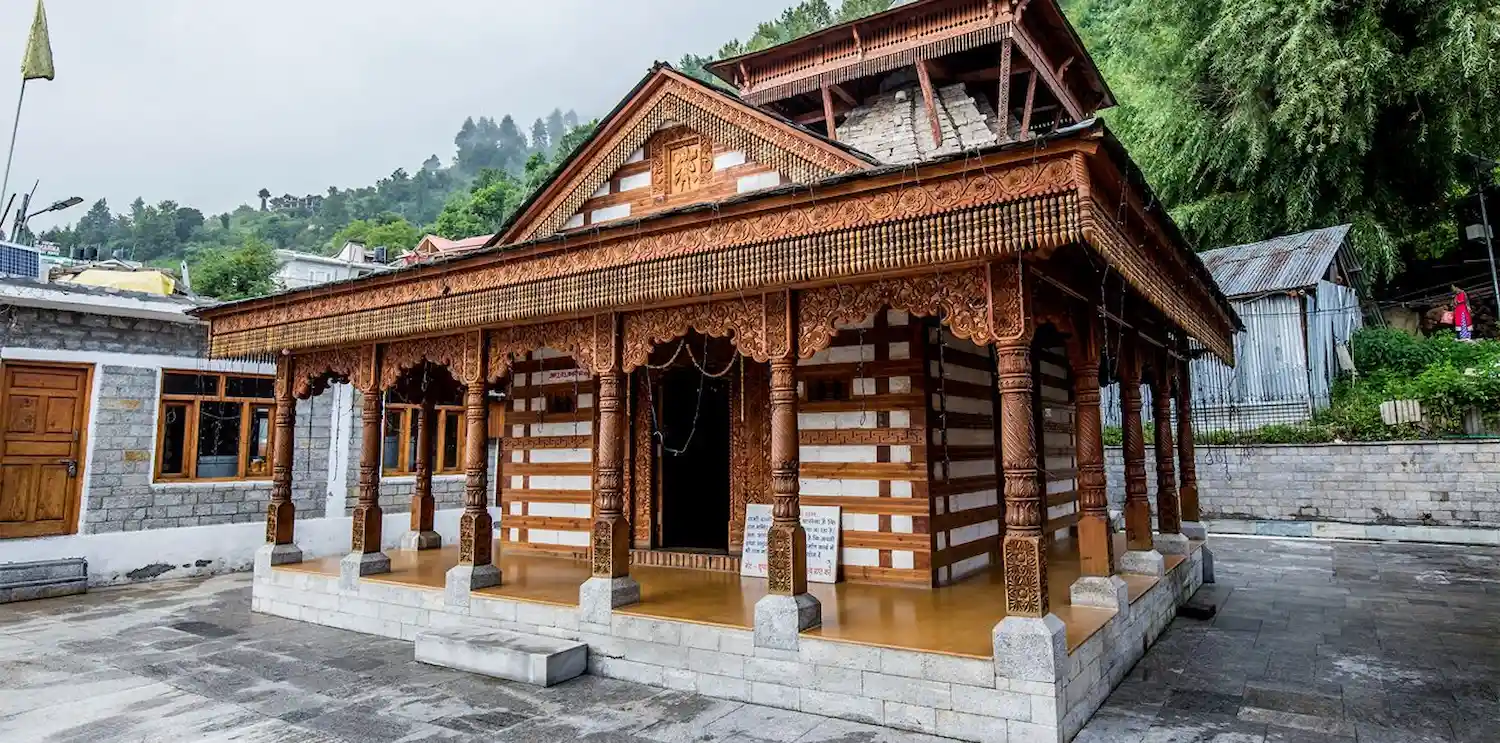
Hadimba Devi Temple is a wooden pagoda shrine built in 1553, set in a deodar cedar forest at Dhungri, about two kilometres uphill from Mall Road. It is dedicated to Hidimba, wife of the Pandava Bhima, and it is the one in-town sight in Manali that genuinely deserves your time. Go early morning or late afternoon to avoid the crowd and the angora rabbit photo touts.
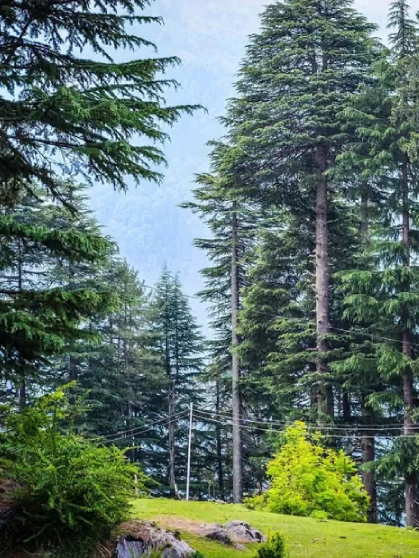
The temple itself is small, dark and old in the best way, with carved wooden doors and a tower of timber and slate that has stood for nearly five centuries. What makes it work is the setting. The deodars around it are tall, ancient and cool, and the light through them in the early morning is the reason photographers keep coming back. There is a smaller shrine to Ghatotkacha, Hidimba and Bhima's son, a short walk away in the same forest, and most people miss it.
A few honest notes. The path up is lined with stalls and people offering yak rides and photos with angora rabbits and in traditional Himachali dress. Some find it charming, some find it pushy. Either way, agree any price first. The temple gets very crowded by mid-morning in peak season, so this is a classic afternoon pick on a day when you did your far drive in the morning. From our hotel it is a short drive, and we are happy to point guests to the quietest entry.
Vashisht hot springs, Manu Temple and the older side of the valley
Vashisht village is about three kilometres from Manali across the river, known for its natural sulphur hot springs and an old stone temple to the sage Vashisht. Manu Temple in Old Manali is dedicated to the sage Manu and is a quiet stop above the cafe lanes. Both are short trips that show you the older, lived-in side of the valley.
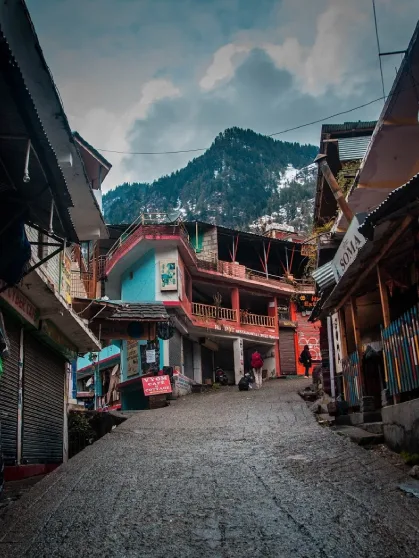
Vashisht is where you go for the hot springs. The water comes out of the ground naturally hot and sulphurous, and there are separate bathing areas for men and women fed by the spring. It is rustic, not a spa, so go in with the right expectation and it is a genuinely local experience. The village around it has narrow lanes, old wooden houses, a few good German bakeries and rooftop cafes, and a slower pace than Old Manali. The temple to the sage Vashisht beside the springs is worth a quiet five minutes.
Manu Temple, up in Old Manali, is the other quiet one. The walk up to it through the old village, past slate-roofed homes and apple trees, is as much the point as the temple itself. Neither of these is a headline sight. They are the texture of the valley, the kind of half-day that turns a trip from a checklist into a memory.
Old Manali: cafes, the river and the slow afternoon
Old Manali is the cafe and backpacker quarter about three kilometres north of Mall Road, across the Manalsu stream. It is the place for unhurried afternoons: rooftop cafes, riverside seating, slow breakfasts, live music in the evening, and a relaxed crowd. It is at its best out of peak season, when the lanes are not shoulder to shoulder.
This is where a lot of people end up spending more time than they planned. The cafes here built their reputation on long lazy breakfasts, decent coffee, wood-fired pizza and apple pie, and a view of the river or the orchards. Drifter's Cafe, Cafe 1947 by the stream, and the bakeries are the names people pass around, though the scene changes year to year. The feel is travellers, music, and afternoons that run long.
Our honest take: Old Manali is wonderful in the shoulder months and overrun in peak summer and around New Year. If you are visiting in June or over the year-end week, come for a weekday breakfast rather than a weekend evening, and you will get the version that earned the reputation. The walk in from the main road, over the bridge and up past the guesthouses and orchards, is half the pleasure.
Mall Road and the town centre
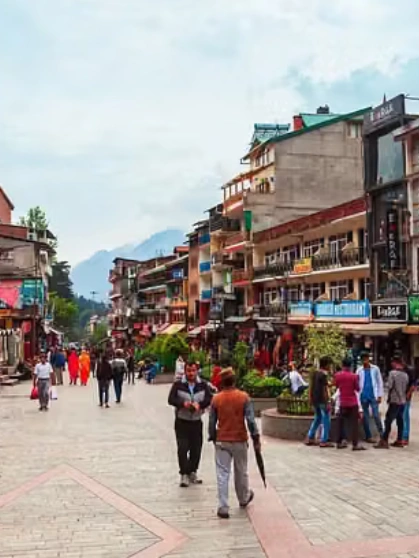
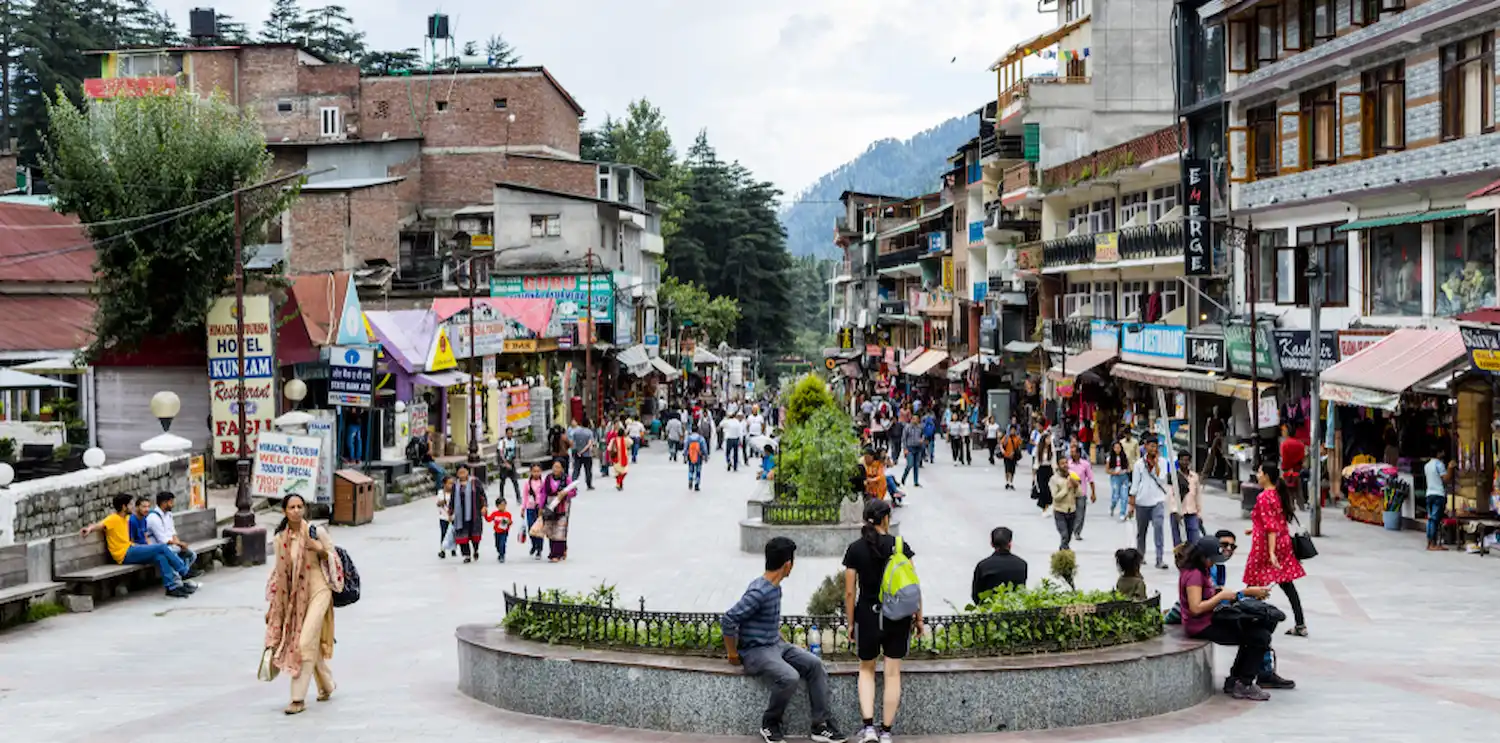
Mall Road is the main pedestrian market street in the centre of Manali, lined with woollens shops, cafes, street food, and Himachali handicraft and shawl stores. It is the natural evening stroll, good for shopping for Kullu shawls, caps and dry fruit, and for a plate of hot momos or trout. Expect crowds in season.
Mall Road is not a sight so much as the town's living room. In the evening it fills with families, the lights come on, and the woollens shops do their best business. This is the place to buy a genuine Kullu shawl or a Himachali cap, but know that quality and price vary widely, so look at a few shops before you buy and check whether you are getting pure wool or a blend. The local dry fruit, the apples in season, and the small bakeries are reliable buys.
For eating, Mall Road and the lanes off it cover the range from cheap and excellent momos to sit-down restaurants doing trout and Himachali thalis. We get into the food properly in the next section. The one practical point: parking near Mall Road in peak season is a nightmare, so if you are staying a short drive away it is often easier to be dropped off, walk the market, and be picked up.
What to eat in Manali: the food worth seeking out
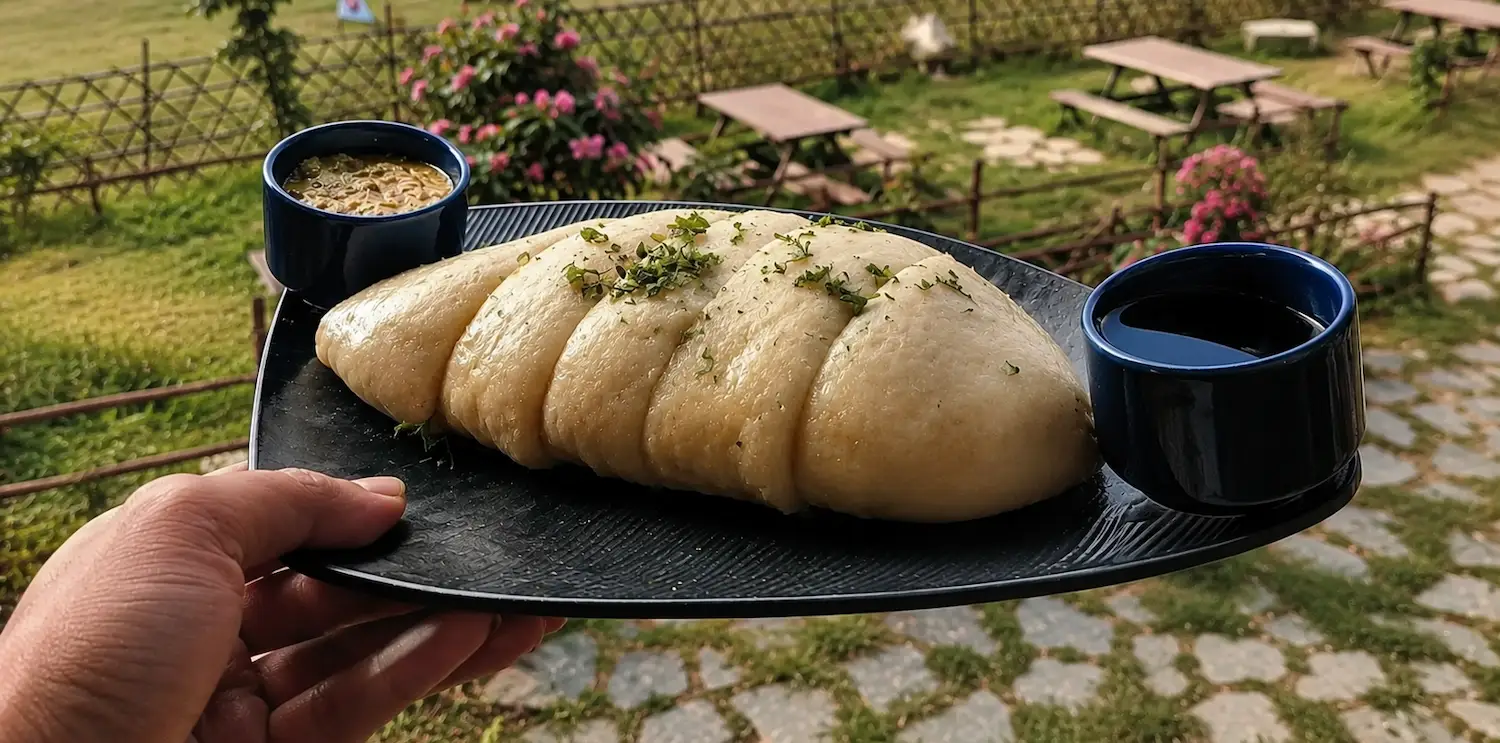
The Himachali food to seek out in Manali is siddu, a steamed stuffed wheat bun served with ghee or dal, chana madra, chickpeas in a yoghurt and spice gravy, and a Dham, the traditional festive thali. For something simpler, fresh river trout, hot momos, thukpa, and Old Manali's bakery apple pie are the reliable favourites.
Most visitors eat pizza and Maggi in Manali and never taste the actual food of the valley, which is a small tragedy because Himachali cooking is quietly excellent. Siddu is the one to try first. It is a soft steamed bun made from fermented wheat dough, sometimes stuffed with a poppy seed or walnut paste, eaten hot with ghee, dal or a chutney. It is warming mountain food and it is hard to find done well, so ask a local or your hotel where the real thing is.
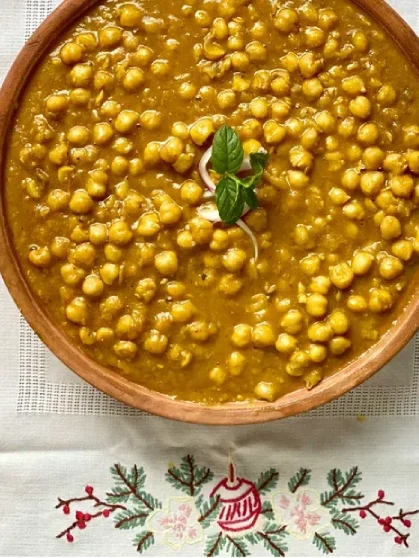
Chana madra is the other signature, chickpeas slow-cooked in a yoghurt-based gravy with whole spices, rich and a little sour. If you get the chance to eat a Dham, the ceremonial Himachali feast traditionally served at weddings and festivals on the floor in a single sitting, take it. It is the deepest version of the local table. Beyond Himachali food, the valley's trout is genuinely good, usually pan-fried or grilled and best near the river. Thukpa and momos, the Tibetan influence, are everywhere and cheap and satisfying after a cold day out. At our own restaurant, Cafe Vindhyas, we keep both Himachali plates and the comfort dishes guests want after a long drive, so you are not forced out into the market every meal.
A few more worth knowing. Babru is the Himachali take on a stuffed kachori, often eaten with tamarind chutney, and aktori is a festive buckwheat pancake from the Lahaul side. In apple season the fresh juice and the local cider are the right thing to drink, and a cup of kahwa, the spiced tea, is the way to end a cold evening. The German bakeries of Old Manali and Vashisht do honest brown bread, cinnamon rolls and apple pie that travellers have leaned on for decades. None of this is fine dining and that is the charm. The food of this valley is warming, simple and made for cold air, and the trip is better when you actually eat it rather than defaulting to another margherita.
Treks and walks around Manali, from easy to serious
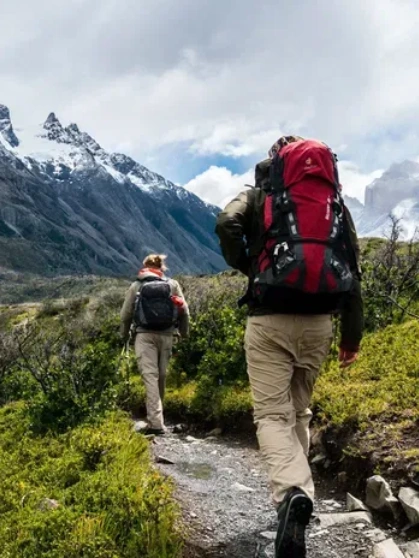
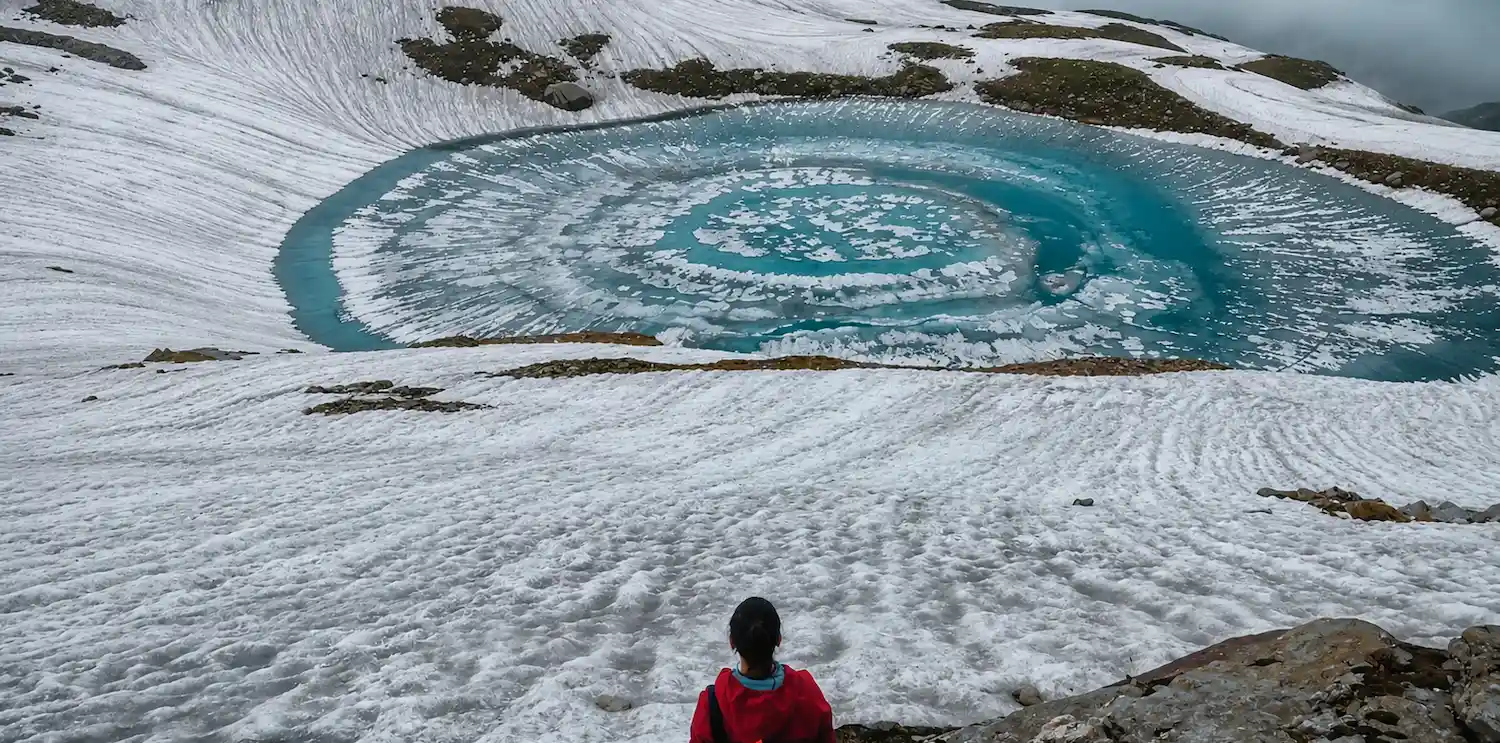
For easy walks near Manali, try Jogini Falls from Vashisht, about a 45 minute climb, or the trails through Old Manali's orchards. For a serious day or multi-day trek, Bhrigu Lake, a high alpine lake at around 4,300 metres reached from Gulaba, is the standout, usually done over two to three days in the summer trekking season.
Not everyone comes to Manali to trek, but the valley is one of the best bases in the country for it, and there is something at every level. Jogini Falls is the easy, satisfying one: start from Vashisht, follow the trail up through forest and past small shrines, and you reach a waterfall in under an hour at a relaxed pace. The Old Manali to Manu Temple walk and the orchard paths are gentler still, good for a morning when you want air without effort.
For the real thing, Bhrigu Lake is the trek people remember. It climbs from the Gulaba side to a high glacial lake ringed by meadows, and in the season the alpine flowers are extraordinary. It is not a casual walk. You want a guide, the right shoes, a couple of days, and reasonable fitness. Hampta Pass and the Beas Kund trek are the other classics out of this valley. If trekking is your reason for coming, plan it as the trip rather than an add-on, and base your acclimatisation days in town first.
A sensible 3-day Manali itinerary
A good three-day Manali itinerary is: day one for Solang Valley and the Atal Tunnel to Sissu, starting early; day two for Hadimba Temple, Old Manali, Vashisht hot springs and Mall Road at an easy pace; day three for a trek like Jogini Falls or a day trip into the Parvati valley. Adjust for season and for how much driving you enjoy.
This is the plan we hand most guests, and it works because it front-loads the long drive and keeps the relaxed things for when the roads are jammed with day-trippers.
Day one is your big drive day. Leave by seven, head up past Palchan to Solang Valley for the ropeway or paragliding before the crowds arrive, then carry on through the Atal Tunnel to Sissu for lunch by the Chandra river. You are back in town by late afternoon, having seen the green Kullu side and the stark Lahaul side in a single day. If Rohtang is open and you have the permit, you can swap Sissu for the pass, but the tunnel route is the smoother day.
Day two is the in-town day, deliberately slow. Start at Hadimba Temple in the cool of the morning, walk the deodar forest, then drop into Old Manali for a long cafe breakfast. After that, cross to Vashisht for the hot springs and the old village lanes. End on Mall Road in the evening for shopping and street food. None of this needs an early alarm, which is the point after day one.
Day three flexes to your energy. Walk up to Jogini Falls from Vashisht for a half-day in the forest, or, if you have a car and an early start, make the longer run into the Parvati valley to Kasol and Manikaran. If you would rather do nothing, the hotel pool and a balcony with a valley view is a perfectly good third day, and plenty of guests choose exactly that.
Offbeat Manali and day trips worth the drive
The best offbeat spots near Manali are Naggar, with its old castle and the Nicholas Roerich art gallery about 20 kilometres south, and the Parvati valley day trip to Kasol, Manikaran and Tosh, around two to three hours away. For quieter air close to town, try Jana Falls beyond Naggar or the trails around the Great Himalayan National Park.
If you have been to Manali before, or you simply want away from the main circuit, these are where to point the car. Naggar is the one we recommend most. It was the old capital of Kullu, and Naggar Castle is a 500-year-old stone-and-timber fort turned heritage property with views straight down the valley. A short way on is the Nicholas Roerich Art Gallery, the former home of the Russian painter, with his Himalayan canvases and a garden that looks across to the snow line. Naggar sits on the same left bank as our hotel, so it is an easy half-day from Shuru.
Beyond Naggar, Jana Falls is a forest waterfall with a cluster of dhabas serving local trout and siddu, a good lunch stop on a quiet drive. For a bigger day, the Parvati valley pulls people in: Kasol on the river, the hot springs and Sikh and Hindu pilgrimage site at Manikaran Sahib, and the slow hippie villages of Tosh and Kalga higher up. Kheerganga, the popular overnight trek to a hot spring, also starts from this valley. It is two to three hours each way from Manali, so treat it as a full day or an overnight, not a quick hop.
Closer to town, the Gadhan Thekchhokling Gompa, the Tibetan monastery near Mall Road, and Van Vihar, the small lakeside deodar park, are gentle stops for an hour. Nehru Kund, a cold spring on the Keylong road, and the Club House by the Manalsu are old-fashioned local spots that most itineraries skip.
Manali for couples and honeymooners
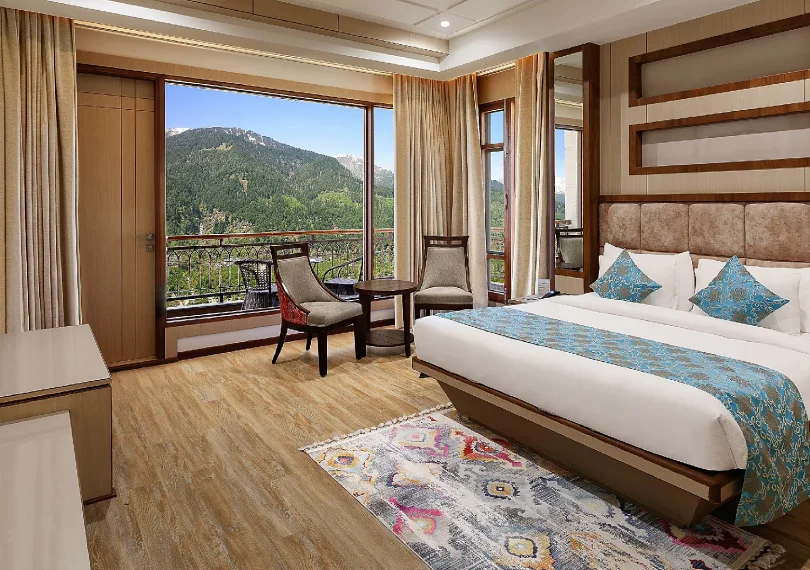
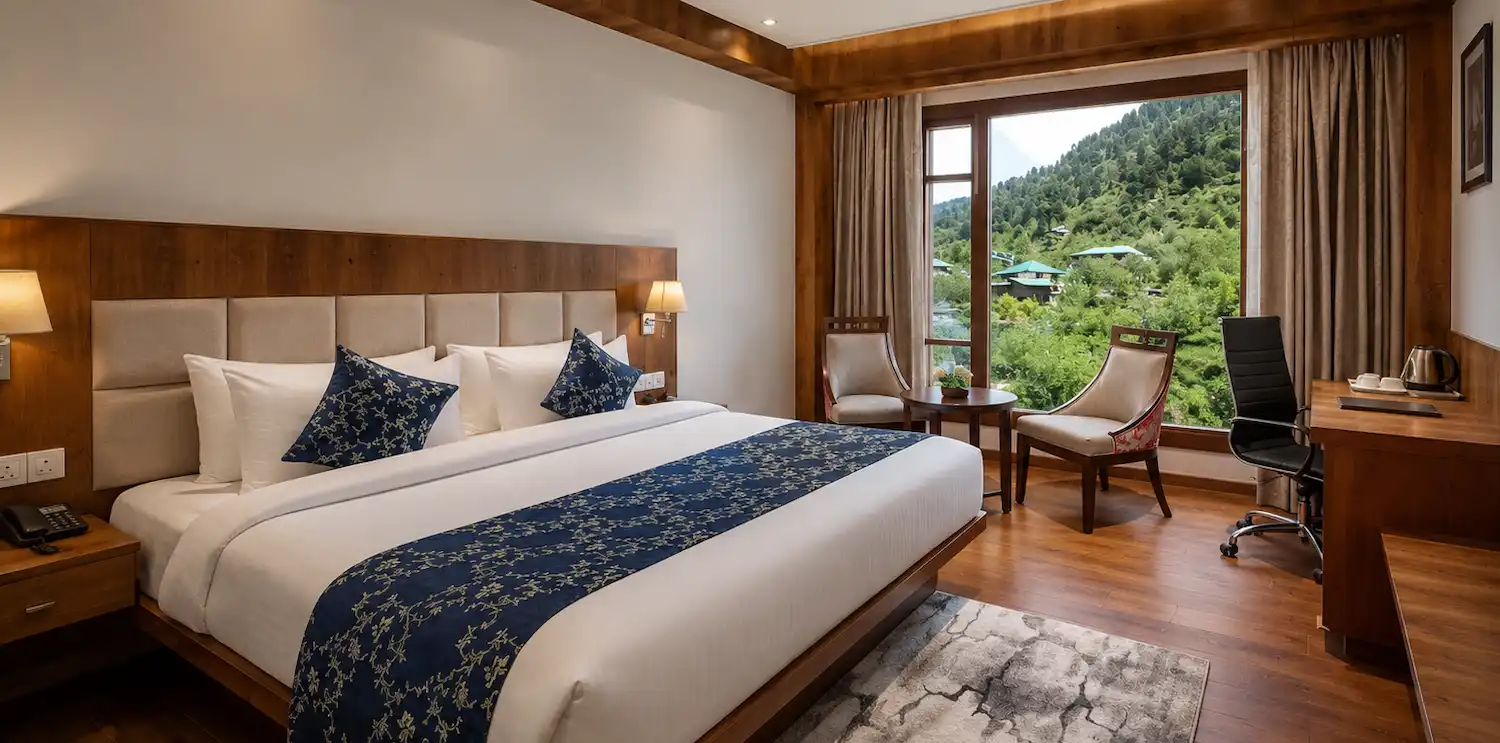
Manali works well for couples and honeymooners who want mountain views, quiet cafes and easy adventure without roughing it. Base on the calmer Naggar road for privacy, take the Solang ropeway and the Atal Tunnel drive together, spend slow mornings in Old Manali, and book a valley-view room with a balcony for the views that make the trip.
Manali has been a honeymoon staple for decades, and for good reason: it is romantic without being difficult. The version couples enjoy most skips the churned snow-point crowds and leans into the quiet. A balcony room looking down the valley, a long breakfast in Old Manali, an afternoon drive to Naggar Castle for the views, an evening on Mall Road. The adventure is there if you want it, paragliding at Solang, the drive into Lahaul, but it is optional. For couples, the room matters more than the itinerary, so this is where the valley-view balcony rooms earn their keep. You can choose a valley-view balcony room at Orchid Manali for the kind of morning that ends up in the photos.
Manali with family and kids
Manali is an easy family destination because the altitude is mild at about 2,050 metres, the activities suit mixed ages, and there is snow in winter that children love. Pick the ropeway over paragliding for small kids, keep drives short on the first day, and choose a hotel with a pool, indoor games and a kids' play area so there is something to do on a rainy afternoon.
Travelling with parents and children changes what you do. The good news is Manali is forgiving. The town sits low enough that altitude is rarely an issue, unlike the higher Himalayan destinations, so most families settle in without trouble. For activities, the Solang ropeway is the family-friendly choice, giving everyone the height and the view without the run-up of paragliding. Sissu, past the Atal Tunnel, has flat riverside space where children can actually run, which is rarer than it sounds in the mountains.
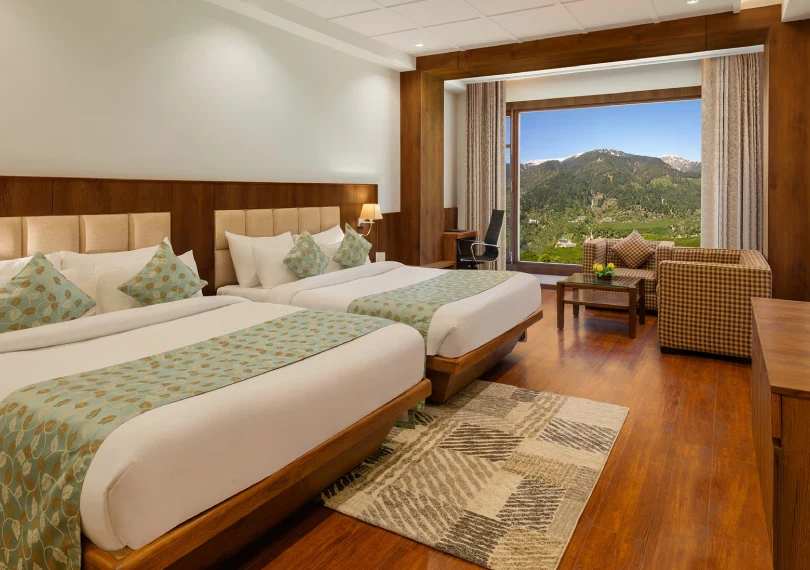
Our practical family advice: keep day one gentle to let everyone adjust, carry layers because mountain weather turns fast, and pick a base with things to do on site for the inevitable tired afternoon or rain hour. A pool, indoor games and a play area mean the kids are happy without another drive. The Premier Family rooms here are built for exactly this, with the space a family needs and the same valley view. You can book a Premier Family Room at Orchid Manali when you are planning the trip.
Practical things to know before you go
The practical essentials for Manali: the town sits at about 2,050 metres so altitude is mild, mobile coverage is good in town and patchy on the high roads, ATMs are on and around Mall Road, and the last reliable fuel is in Manali before the Atal Tunnel and Lahaul. Carry layers in every season and keep cash for small dhabas and snow points.
A few things that save trips from going sideways. On connectivity, the major networks work fine in town, but coverage drops on the way to Rohtang, the Atal Tunnel and deep into Lahaul, so download offline maps before you drive out. On money, there are ATMs around Mall Road, but they run dry in peak season and at New Year, and the small dhabas and snow-point vendors want cash, so carry some. On fuel, fill up in Manali before any trip toward the tunnel, Lahaul or Rohtang, because there is no dependable pump for a long way past town.
On clothing, the rule is layers, always, even in summer, because evenings and high points are cold whatever the date. For a winter trip pack serious cold-weather gear. On getting around, local taxis run on fixed union rates that are not cheap, autos are limited, and a hired car with a driver for your sightseeing days is usually the sane choice on these roads, especially if you are not used to hill driving. Tell us your plans at check in and we will help arrange a reliable car rather than leaving you to the Mall Road taxi stand.
When is the best time to visit Manali?
The best time to visit Manali depends on what you want. For snow, come from late December to February. For pleasant summer weather and an escape from the plains, come March to June. For green valleys and lower prices, come in the monsoon, July to early September, but watch for landslides. For clear skies, apples and the nicest all-round weather, come in October and November.
Here is the season-by-season honest read, the kind we give guests who call to ask.
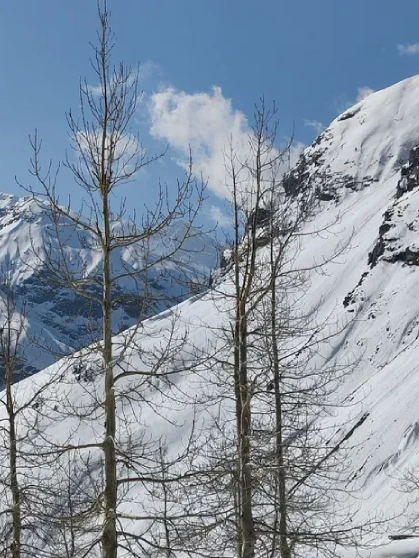
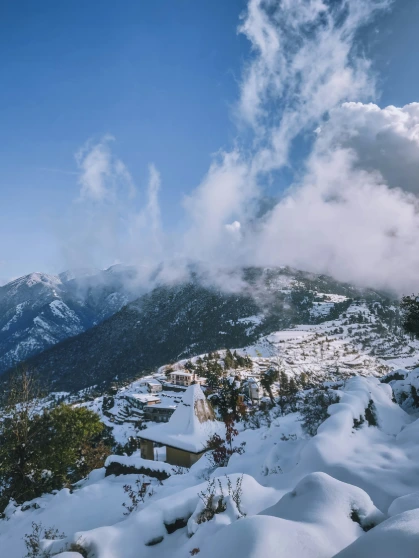
Winter, late December to February, is for snow. The town is cold, sometimes the higher roads close, and Rohtang is shut, but Solang and Gulaba get snow and the valley looks its most dramatic. New Year week is the single busiest, priciest time of the year, so book early or avoid it. Pack for real cold.
Spring and summer, March to June, is peak family season. The weather is pleasant, the plains are roasting, and everyone heads for the hills. This is when you most need the early-start, do-the-far-things-first discipline, because the roads are at their most clogged. Prices are high. Book ahead.
Monsoon, July to early September, is the quiet, green, cheaper window. The valley is at its lushest and the crowds thin out. The catch is rain and the real risk of landslides and road blocks on the highways, so keep your plans flexible and do not schedule a tight onward connection. If you are comfortable with that, monsoon Manali is lovely and far calmer.
Autumn, October and November, is our quiet favourite. The monsoon is gone, the skies are clear, the apple harvest is in, and the weather is crisp without being bitter. Crowds and prices ease off after the summer rush. If you want the valley at its best-behaved, this is the window.
How much does a Manali trip cost?
A Manali trip cost is driven by three things: the season, how you travel, and how much adventure you add. Peak summer and New Year are the dearest, the monsoon and autumn the cheapest. Transport from the plains, activities like paragliding and the ropeway, and your choice of stay move the budget far more than food does, since local meals are inexpensive.
Rather than quote a single figure that goes stale, here is what actually moves the number, so you can plan your own budget honestly.
Season is the biggest lever. Room rates and car hire climb hard in peak summer, May and June, and again over the year-end and New Year week. The same trip in the monsoon or in October can cost noticeably less for the identical stay, because demand drops. If budget matters and snow does not, the shoulder months are where your money goes furthest.
Transport is the next big piece. An overnight HRTC or private Volvo from Delhi is the budget way in. Flying to Bhuntar is the priciest and least reliable. Flying to Chandigarh and hiring a car up is the middle path most people take. Once here, a hired car with a driver for your sightseeing days is a real cost on these roads, but usually worth it against the fixed union taxi rates and the stress of hill driving.
Activities and food round it out. Paragliding, the ropeway, zorbing and snow gear at Solang are pay-as-you-go and negotiated, so agree prices first and expect peak-season markups. Food, by contrast, is cheap if you eat local: a plate of momos, a Himachali thali or a bowl of thukpa costs very little, and only the sit-down trout dinners climb. For the stay itself, the honest move is to check live Orchid Manali rates for your dates, since hill rates swing with the season and the direct rate carries the Orchid Rewards discount.
Manali in winter or summer: which is better?
Choose winter in Manali, late December to February, if your goal is snow, cosy stays and dramatic white landscapes, and you can handle real cold and the chance of closed high roads. Choose summer, March to June, for pleasant weather, an escape from the plains heat, and full access to Solang, the Atal Tunnel and Rohtang, accepting bigger crowds and higher prices.
This is the comparison guests ask about most, so here is the straight version.
Winter Manali is about snow and atmosphere. From late December the town and the lower slopes can turn white, Solang and Gulaba become snow-play and ski areas, and the valley looks its most cinematic. The trade-offs are genuine cold, the chance that high roads and Rohtang are shut, and a New Year week that is the most crowded and expensive of the year. It suits couples wanting a cosy stay and anyone whose children have never seen snow.
Summer Manali is about access and relief. From March to June the weather is mild and pleasant, every road and activity is open, and the valley is the classic escape from a roasting plain. The cost is crowds, peak prices and the traffic discipline this whole guide keeps insisting on. It suits families on school holidays and first-time visitors who want to see everything.
Our own pick, if neither snow nor school holidays tie you down, is the in-between: late March and early April for blossom and thinning winter crowds, or October for clear skies, the apple harvest and easy prices. You get the access of summer without the peak-season scramble. Whichever window you choose, the planning rules in this guide stay the same: start early, pick a few things, and base yourself somewhere quiet.
How to reach Manali
The nearest airport to Manali is Bhuntar, the Kullu-Manali Airport, about 50 kilometres south, with limited flights. The practical air route for most travellers is to fly to Chandigarh and drive about 8 to 9 hours. By road, Manali is roughly 310 kilometres from Chandigarh and about 530 kilometres from Delhi, with overnight Volvo buses running from Delhi. There is no direct broad-gauge railway to Manali.
Breaking that down honestly, because the airport question confuses a lot of people. Bhuntar, the Kullu-Manali Airport, is the closest at around 50 kilometres, but flights are few, small, weather-dependent and expensive, so do not build a tight plan around it. Most people fly into Chandigarh, which has good connectivity, and drive up. The Chandigarh to Manali drive is around 8 to 9 hours via Bilaspur, Mandi and Kullu, and the four-laning of stretches of this highway has helped, though landslide season can still slow it.
By road from Delhi, the overnight Volvo buses are the standard budget option, leaving in the evening and reaching Manali the next morning after about 12 to 14 hours. Self-driving from Delhi is a long but doable trip of around 530 kilometres. For trains, the nearest convenient broad-gauge railheads are Chandigarh and Una, from where you drive. The novelty narrow-gauge line ends at Joginder Nagar, which is scenic but not practical for most. Tell us your arrival point and time when you book and we will help you line up a reliable car for the last leg.
Where to stay in Manali, and why base yourself on the Naggar road
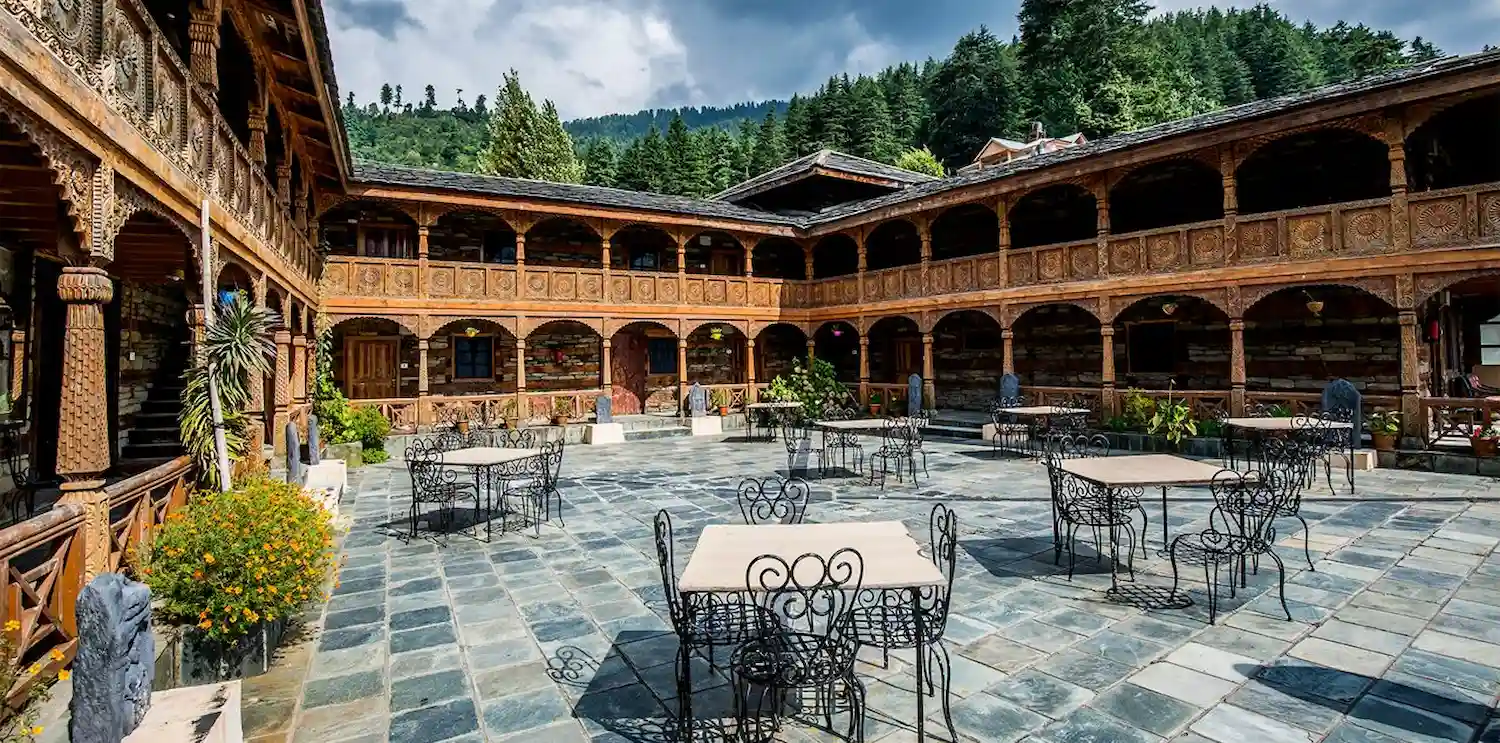
The smart place to base yourself in Manali is a short drive from Mall Road on the quieter Naggar road side, close enough to reach the market and temples in minutes but away from the worst of the town-centre traffic and noise. The Orchid Hotel Manali sits at Shuru on the Naggar road, on the calmer left bank of the Beas, with valley-view rooms and the full range of family and couple stays.
We are biased, of course, but the logic stands on its own. The centre of Manali is loud and jammed in season. The far sights are all a drive away. So the room that serves you best is one that is quiet enough to actually rest in, with valley views worth waking up to, and close enough that you are not adding an hour to every outing. That is exactly the spot we picked at Shuru on the Naggar road, a short drive from Mall Road on the left bank of the Beas.
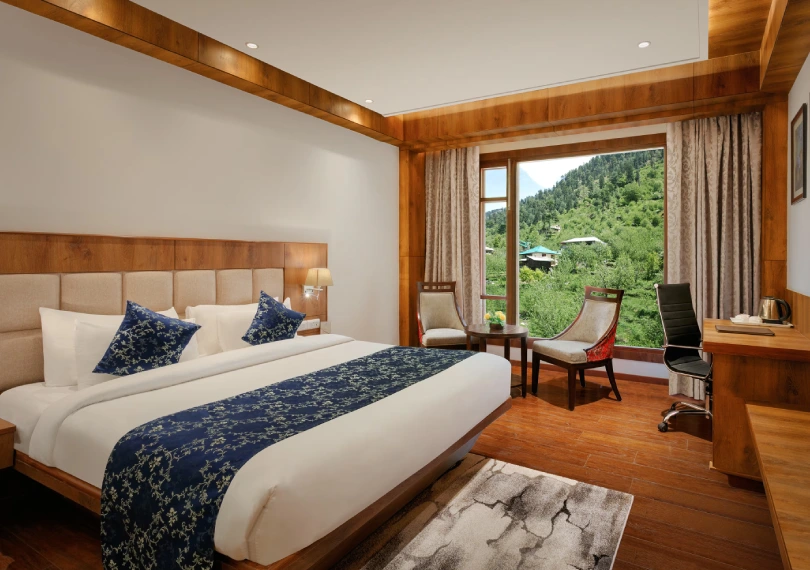
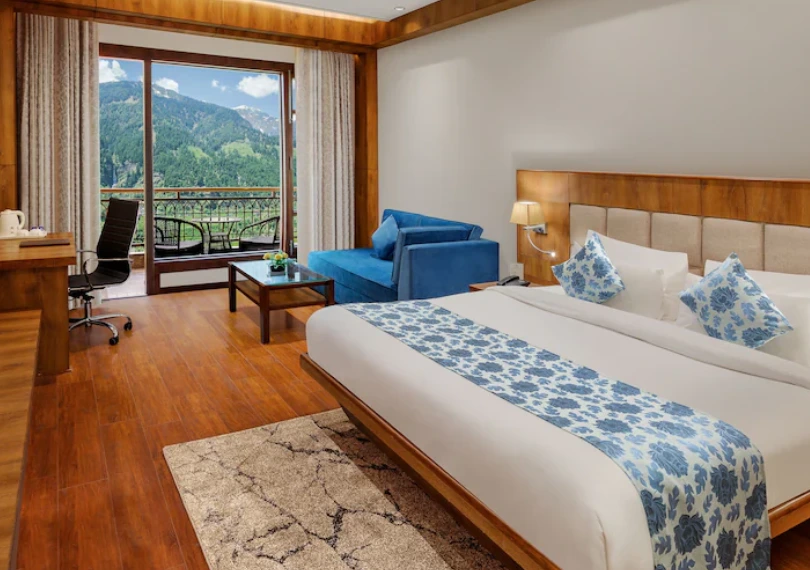
The Orchid Hotel Manali is part of the Orchid group, Asia's first chain of five-star ECOTEL hotels, so the environmental standards run through the whole property, not just a line on a website. The rooms run from the 380 square foot Deluxe with an apple-orchard view, through the 600 square foot Premier Valley View and Premier Family rooms with private balconies, up to the Club Rooms and the 850 square foot Presidential Suite with sweeping views down the valley. Families, couples and groups each have a room type that fits. You can see all five Orchid Manali room types and check live rates and pick by view, size and balcony.
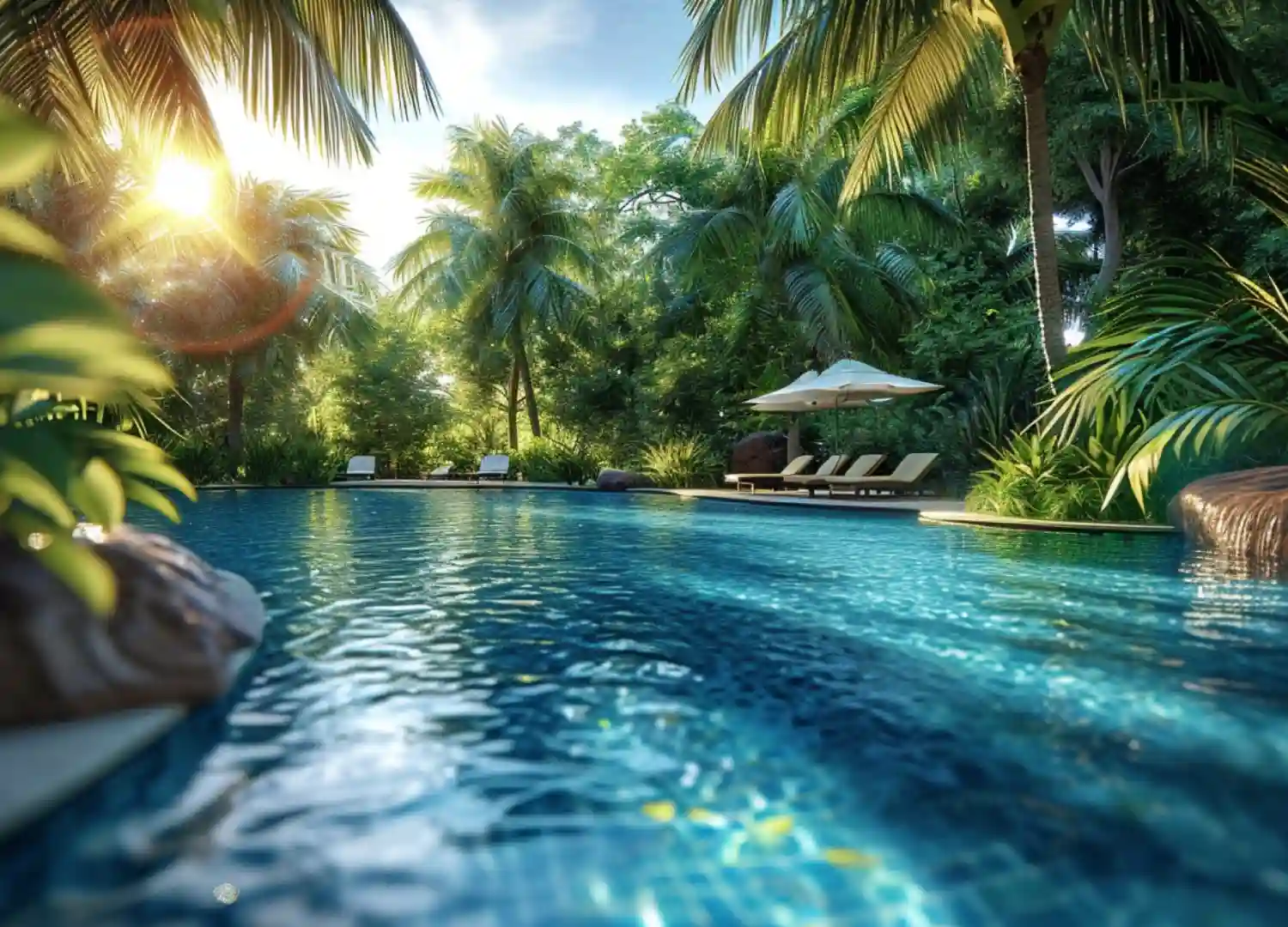
On site there is a swimming pool, indoor games and a kids' play area, ample parking, free Wi-Fi throughout, and our restaurant, Cafe Vindhyas, which means you are not forced into the market for every meal after a long day out. There is a banquet space for events and small mountain weddings, and an EV charger for anyone driving up electric. The reviews back it up, with strong ratings across Google, Tripadvisor and Booking.com. If you want the easy version of this whole guide, make the hotel your base and do the valley from here. You can book your Orchid Manali stay direct for the best rates rather than going through an OTA.
Deals and offers at Orchid Manali
Orchid Manali runs an Orchid Rewards offer of up to 30 percent off on direct bookings, which beats most OTA rates and adds member benefits. The direct rate on the hotel's own booking page is consistently the best value, and it is the only way to be sure you get the current Orchid Rewards discount and any seasonal package.
The practical money advice for any Manali stay is simple: book direct. The Orchid Rewards programme currently offers up to 30 percent off on direct bookings, and because it is the hotel's own loyalty rate, you also avoid the OTA commission baked into third-party prices and you get member benefits that the booking sites cannot match. Seasonal packages, the quieter monsoon and autumn windows especially, are where the value is best. To get the live discount and any current package, check the latest Orchid Manali offers and book direct.
Plan the details
For deeper planning, read our focused guides: Best Time to Visit Manali, Solang Valley from Manali, Atal Tunnel Day Trip, Manali Famous Food, Manali 3-Day Itinerary, How to Reach Manali.
FAQs
Three to four days is the sweet spot for Manali itself. That gives you one day for Solang and the Atal Tunnel side, one day for the temples, Old Manali and the market, and a spare day for a trek, Rohtang in season, or simply resting. Add days if you plan a serious trek or want to continue into Lahaul or Spiti.
For most visitors, yes. The Atal Tunnel is all-weather, needs no permit, and takes you into the dramatic Lahaul landscape at Sissu in minutes. Rohtang is seasonal, permit-controlled and often crowded. Choose Rohtang only when it is open, the weather is clear, and standing on the high pass itself is what you came for.
You need a permit for Rohtang Pass, booked in advance through the official Himachal government portal, with a daily vehicle cap and a Tuesday closure. The Atal Tunnel and Solang Valley need no permit. If you continue deep into Lahaul and Spiti, check current local rules for that region before you go.
It depends on the month. For reliable snow in the town and lower slopes, come from late December to February. In other months you may still find snow at higher points like Rohtang in early season, but the town itself will not be snowy. Do not promise children snow in summer.
March to June suits families best for pleasant weather and an escape from the plains heat, though it is also the busiest. October and November are quieter and very pleasant with the apple harvest. For a family snow trip, late December to February works if you are prepared for real cold.
The nearest airport is Bhuntar, the Kullu-Manali Airport, about 50 kilometres south, but it has limited flights. Most travellers fly to Chandigarh and drive about 8 to 9 hours, around 310 kilometres.
Solang Valley is about 14 kilometres north of Manali, a drive of roughly 40 to 60 minutes depending on the season and traffic. Leave early in peak months to avoid the jams.
Manali and the wider Himachal region are known for siddu, a steamed stuffed wheat bun, chana madra, chickpeas in a yoghurt gravy, and the festive Dham thali. Fresh river trout, momos and thukpa are the other favourites.
The monsoon, July to early September, gives you green valleys, thin crowds and lower prices, which many travellers love. The trade-off is rain and a real risk of landslides on the approach highways, so keep plans flexible and avoid tight onward connections.
Stay a short drive from Mall Road on the quieter Naggar road side, on the left bank of the Beas, which keeps you close to the sights without the town-centre noise and traffic. The Orchid Hotel Manali at Shuru is on this calmer side with valley-view rooms.
Plan two or three things, start early, eat the real food, and pick a base that lets you rest. Do that and Manali gives you the trip the glossy guides only promise. When you are ready, book your valley-view stay at Orchid Manali.

Contact Us
With a 95 years legacy of exceptional hospitality, Orchid Hotel invites you to connect with us. For inquiries regarding reservations, events, corporate partnerships, or media relations, please use the contact details below. Our team is committed to providing prompt and personalized assistance, ensuring your experience with our eco-conscious hotels is seamless and memorable.
Related Posts